

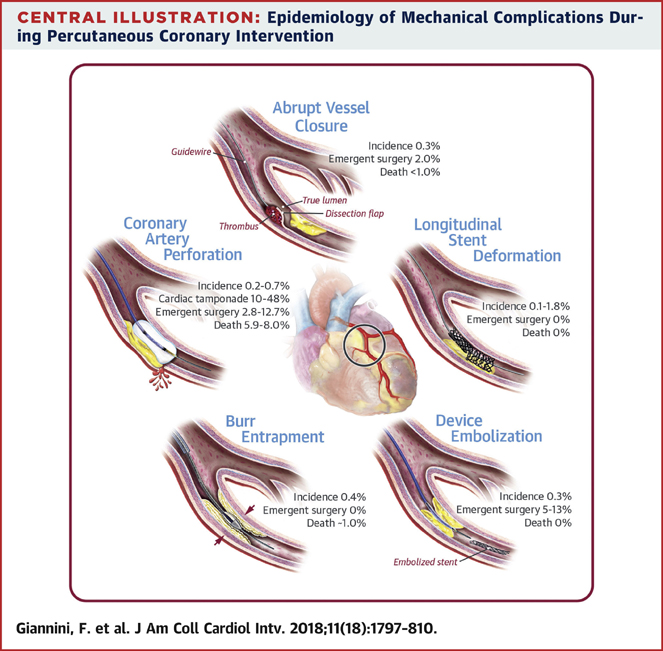
Percutaneous Coronary Intervention (PCI) complications, while rare, can include acute vessel closure, coronary perforation, bleeding at access sites, kidney injury from contrast dyes, stroke or arrhythmias
. Although often safe, risks also include late stent thrombosis, in-stent restenosis, and rare equipment entrapment, requiring prompt team recognition and management
Acute Procedural Complications
- Vessel Damage: Coronary dissection (tear), rupture, or perforation.
- Ischemia/Flow Issues: Abrupt vessel closure, thrombus formation, or "no-reflow" (inadequate blood flow after opening the blockage).
- Vascular Access Issues: Bleeding, pseudoaneurysm, or haematoma at the femoral or radial artery site.
- Device-Related: Stent dislodgement, loss, or embolization (device moves to the wrong spot).
- Systemic Events: Acute kidney injury from contrast dye, stroke, or arrhythmias
Long-Term Complications
- Stent Thrombosis: Blood clot formation within the stent (can be early or late), often requiring dual antiplatelet therapy.
- In-Stent Restenosis: Re-narrowing of the artery within the stent over time.
- Aneurysm Formation: Weakening of the artery wall
Factors Increasing Risk
- Complex, long, or heavily calcified lesions.
- Chronic Total Occlusions (CTO).
- Comorbidities such as diabetes or chronic kidney disease
Management of Complications
- Immediate intervention: Medications (e.g., GP IIb/IIIa inhibitors), additional stents, or balloon dilatation.
- Pericardiocentesis: To treat cardiac tamponade caused by perforation.
- Emergency Surgery: Urgent CABG (coronary artery bypass graft) if PCI complication cannot be managed