

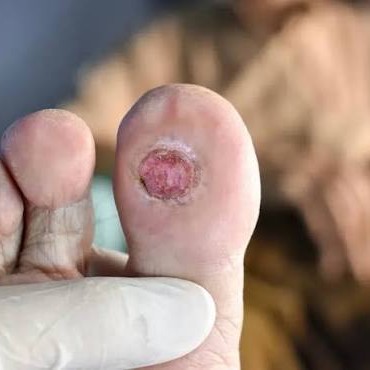
Diabetic foot specifically diabetic foot ulcers often develop as a result of long term complications of diabetes including vasculopathy, neuropathy and mechanical factors such as pressure or trauma.
Loss of protective sensation due to sensory neuropathy, muscle imbalance and deformities due to motor neuropathy and dry skin with cracks caused by autonomic neuropathy increase the risk of unnoticed injuries, accelerated tissue destruction and delayed wound healing.
Persistent hyperglycemia also results in impaired immune cell function release of pro inflammatory cytocins impaired angiogenesis and collagen synthesis the interplay of all these factors can eventually progress, leading to gangrene and necessitating amputation
The diabetic foot ulcers are one of the leading causes of non traumatic lower extremity amputations . It remains as one of the most concerning and serious complications, leading the substantious loss of quality of life increased morbidity and healthcare cost .It is estimated that up to 1 and 25 people with the diabetes will develop a foot ulcer in their lifetime.
Patient should be educated about
Loss of protective sensation due to sensory neuropathy, muscle imbalance and deformities due to motor neuropathy and dry skin with cracks caused by autonomic neuropathy increase the risk of unnoticed injuries, accelerated tissue destruction and delayed wound healing.
Persistent hyperglycemia also results in impaired immune cell function release of pro inflammatory cytocins impaired angiogenesis and collagen synthesis the interplay of all these factors can eventually progress, leading to gangrene and necessitating amputation
The diabetic foot ulcers are one of the leading causes of non traumatic lower extremity amputations . It remains as one of the most concerning and serious complications, leading the substantious loss of quality of life increased morbidity and healthcare cost .It is estimated that up to 1 and 25 people with the diabetes will develop a foot ulcer in their lifetime.
Patient should be educated about
- Daily food inspection using a foot mirror to examine the souls and check for blisters redness cracks swelling or discharge
- Foot hygiene by cleaning the feed daily with lukewarm water and mild soap, drying thoroughly including between the toes and applying moisturizer to prevent dryness.
- Nail and skin care by trimming nails properly, avoiding cutting cuticles and not using sharp instruments or harsh Chemicals on corns or calluses without professional advise.
- Avoid walking bare food even at home we are appropriate socks and well fitting protective foot wear
- Identify warning sign such as redness swelling new ulcers foul order pain coldness in the toes of heat or black inning any of which should be reported immediately.
- Maintain tight glycemic control to support nerve and vascular health.