
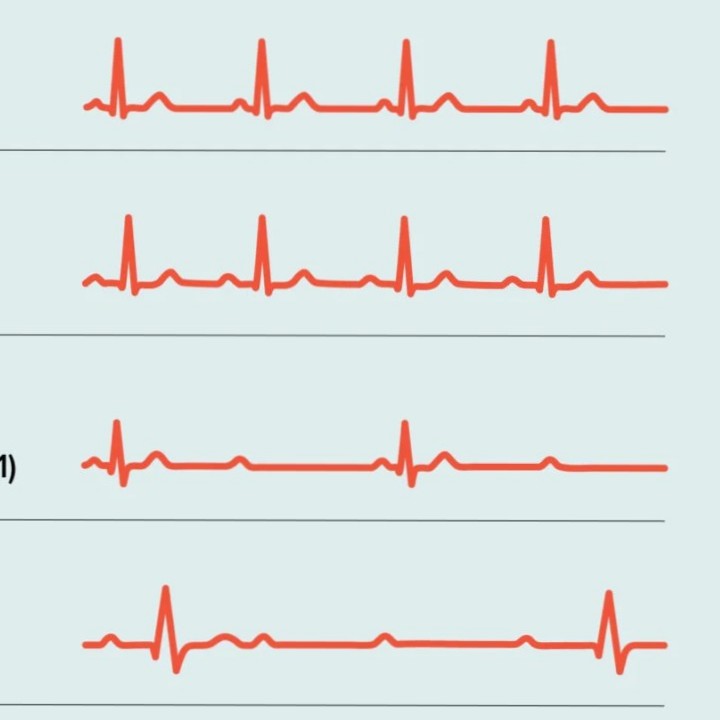
represents a delay or disturbance in the transmission of an impulse from the atria to the ventricles. This can be due to an anatomical or functional impairment in the heart’s conduction system
Symptoms range from none (first-degree) to severe, including fainting, dizziness, and chest pain
Symptoms range from none (first-degree) to severe, including fainting, dizziness, and chest pain
.
Treatment, often necessary for second or third-degree blocks, involves pacemakers to restore normal rhythm
Treatment, often necessary for second or third-degree blocks, involves pacemakers to restore normal rhythm
Types of Heart Block
- First-Degree: Electrical signals are slowed but all reach the ventricles; often no symptoms.
- Second-Degree: Some signals do not reach the ventricles, causing skipped or missed beats (Mobitz Type I or II).
- Third-Degree (Complete): No signals reach the ventricles, causing a slow, inefficient, and potentially dangerous rhythm.
- Bundle Branch Block: A specific delay in one of the heart's electrical pathways
Causes and Risk Factors
- Heart Disease: Coronary artery disease, heart attack (myocardial infarction), and cardiomyopathies.
- Aging: Scarring or degeneration of the heart's electrical system over time.
- Medications: Beta-blockers, calcium channel blockers, or antiarrhythmic drugs.
- Heart Damage: Damage from heart surgery or infections (myocarditis).
- Congenital
Diagnosis and Treatment
- Diagnosis: Primarily diagnosed via electrocardiogram (ECG or EKG) to map electrical activity.
- Treatment:
- First-degree: Usually no treatment required.
- Second/Third-degree: Often require a pacemaker to regulate heartbeat